
Experiencing vehicle damage is incredibly stressful. Whether you have just been involved in a major accident or you are finally addressing years of cumulative wear and tear, the initial sinking feeling is universal. Beyond the immediate inconvenience of being without your vehicle and navigating the labyrinth of insurance claims, a larger, more persistent worry often takes root: how will this damage affect your vehicle’s long-term financial worth? For many people, a car is their second-largest asset, and watching its value plummet due to an unfortunate event is a bitter pill to swallow.
However, a comprehensive approach to vehicle restoration can absolutely save your investment. Restoring value is not merely about applying a fresh coat of paint or pulling out a minor dent so the car looks shiny again. True restoration requires a holistic approach that guarantees comprehensive structural, mechanical, and aesthetic integrity. When appraisers, dealership trade-in managers, and private buyers evaluate a vehicle, they look far beneath the surface. They are trained to spot the subtle telltale signs of a careless fix, and they will dramatically reduce their offers if they suspect the vehicle has been compromised.
To protect your investment and ensure you command top dollar at resale, you must approach the repair process meticulously. This means addressing every single layer of damage. From the hidden geometry of the steel frame to the clarity of the safety glass and the precise calibration of the mechanical systems, every component plays a crucial role in the overall valuation. This comprehensive guide will walk you through exactly how to manage the restoration process, ensuring your vehicle remains safe, reliable, and financially valuable for years to come.
Assess and Correct Hidden Structural Damage Immediately
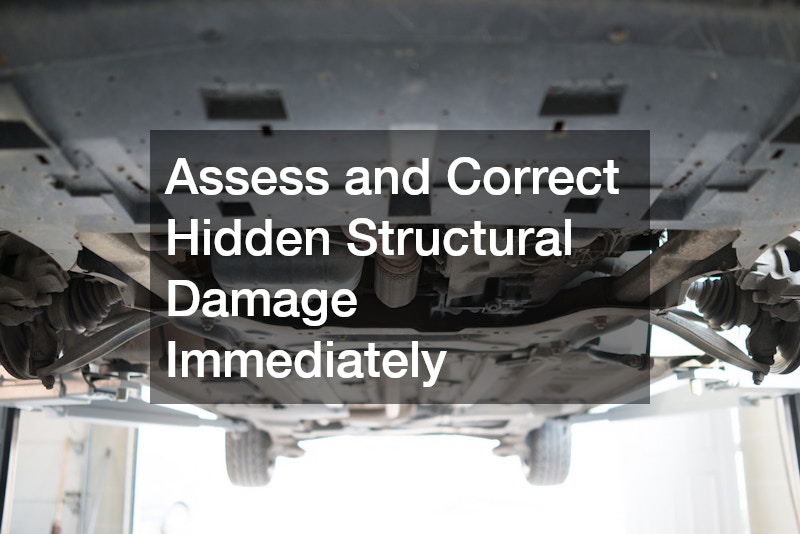
When an impact occurs, the exterior panels—the bumpers, fenders, and doors—absorb the initial blow. However, modern vehicles are designed with advanced crumple zones meant to sacrifice themselves to protect the passenger cabin. This means that even a seemingly minor fender bender can send shockwaves through the underlying chassis, subtly bending the frame out of its factory alignment. Relying solely on cosmetic fixes is a dangerous gamble, both for your safety and your wallet. Structural integrity dictates the entire foundation of the vehicle; if the frame is compromised, the car will never drive correctly, and its resale value will plummet the moment a knowledgeable buyer puts it on a lift. Therefore, thorough auto collision repair is not just about making the vehicle look whole again; it is about guaranteeing the internal skeleton is mathematically sound.
To ensure your vehicle’s structure is perfectly restored, you must demand modern measurement techniques and high-quality materials. If an appraiser spots frame damage that was improperly pulled, the vehicle’s value is immediately classified as severely compromised. A meticulous approach to auto body repair ensures that no structural flaw goes unnoticed.
Here are the specific, actionable steps you need to take regarding structural integrity:
-
Request Computerized Frame Measurements: Do not accept a visual inspection of the chassis. Modern frame alignment requires computerized, laser-guided measuring systems that compare your vehicle’s current dimensions to the manufacturer’s original blueprints. Demand to see the electronic printout before and after the pulling process. This document is absolute proof that the unibody or frame has been returned to factory specifications, down to the millimeter.
-
Demand OEM or High-Quality Equivalent Parts: Insurance companies are in the business of saving money, which often means they will write estimates based on aftermarket or salvaged parts. While sometimes acceptable, inferior aftermarket body panels often have poor fitment, resulting in uneven panel gaps that instantly signal a prior accident to a buyer. Review your insurance policy carefully and fight for Original Equipment Manufacturer parts, especially for crucial structural components.
-
Inspect Panel Gaps and Paint Matching: Once the structural work is done, closely examine the gaps between the doors, hood, and fenders. They should be perfectly uniform. Furthermore, look at the paint under different lighting conditions (direct sunlight and artificial light) to ensure the newly painted panels blend seamlessly with the older, factory-painted sections.
Realign the Undercarriage for Optimal Driving Dynamics

There is an often-overlooked connection between exterior impacts and undercarriage stress. When a wheel strikes another vehicle, a curb, or a pothole during an accident, the kinetic energy is transferred directly into the steering and suspension components. Tie rods can bend, control arms can warp, and struts can leak. A vehicle might look perfectly pristine on the outside, but if the undercarriage is compromised, the ride quality will suffer immensely. Driving dynamics play a massive role in perceived value. If a potential buyer takes the car for a test drive and feels a vibration in the steering wheel, a pull to one side, or hears a clunking noise over a speed bump, they will walk away—or demand a massive discount. Comprehensive auto repair services must extend beneath the vehicle to guarantee a smooth, factory-grade ride.
Restoring the driving dynamics is critical for preserving the lifespan of your tires and ensuring the vehicle responds safely in emergency maneuvers. Ignoring a bent control arm will lead to a cascade of mechanical failures over time. A professional auto suspension repair strategy prevents these cascading issues and maintains the vehicle’s mechanical pedigree.
Take these actionable steps to verify your undercarriage is in peak condition:
-
Check for Uneven Tire Wear Post-Impact: In the weeks and months following a repair, keep a close eye on your tire tread. Run your hand flat across the surface of the tires. If you feel “cupping” (high and low spots) or notice the inner or outer edges wearing down faster than the center, your alignment is off, or your struts are failing. Documenting perfectly even tire wear proves to a buyer that the geometry is sound.
-
Audit the Steering Before Final Sign-Off: Before accepting the vehicle back from the mechanic, take it for a rigorous test drive. Find a flat, straight road and momentarily loosen your grip on the wheel; the car should track perfectly straight without drifting. Turn the wheel full-lock at slow speeds to listen for groans or clicking, which indicate failing constant velocity joints or power steering issues.
-
Test the Shock Absorbers: Drive over varied terrain, including small bumps and dips. The car should bounce once and immediately settle. If it continues to float or bounce multiple times, the hydraulic damping in the shocks or struts has been compromised and requires immediate replacement.
Eliminate Visibility Hazards Through Prompt Glass Interventions
While it is easy to focus on crushed steel and bent mechanical parts, the condition of your vehicle’s glass is equally vital to its safety profile and overall value. The front glass is not merely a shield against wind and rain; it is a structural component of the vehicle’s cabin. In the event of a rollover, the front glass provides up to 30% of the roof’s structural support. Furthermore, it serves as the backstop for the passenger-side airbag. If the glass is weakened by cracks or severe pitting, it fails to perform these critical safety functions. Consequently, compromised glass will cause a vehicle to fail state safety inspections and immediately lower buyer confidence. Fortunately, minor auto windshield repairs can often salvage the original factory seal if caught early, preserving both safety and value.
When minor damage is ignored, it inevitably worsens, eventually necessitating a full windshield replacement. Beyond the physical structure, modern automotive glass is a highly sophisticated technological hub. Addressing glass damage correctly involves both physical restoration and digital recalibration.
Here is how you can proactively manage your vehicle’s glass to protect its value:
-
Stop Small Cracks from Spreading Promptly: Temperature fluctuations are the enemy of chipped glass. The transition from a freezing night to blasting the defroster in the morning will cause the glass to expand rapidly, turning a tiny chip into a massive, unrepairable spiderweb crack. As a rule of thumb, if a chip is smaller than a quarter and not in the driver’s direct line of sight, have it filled with specialized resin immediately to halt the spread.
-
Verify Advanced Driver Assistance Systems Calibration: If your vehicle features lane departure warnings, forward collision alerts, or adaptive cruise control, the cameras and sensors for these systems are mounted directly behind the rearview mirror. When glass is replaced, these sensors are moved. You must demand documentation proving that the Advanced Driver Assistance Systems (ADAS) were electronically recalibrated (either statically with physical targets or dynamically via a strict road test). Uncalibrated safety systems are a massive liability and heavily depreciate a modern vehicle.
-
Check for Optical Distortion: After any glass work, sit in the driver’s seat and move your head side to side while looking at a straight line outside (like a building edge or a light pole). If the line waves or bends, the new glass has optical distortion. This causes driver fatigue and is a sign of cheap, non-compliant glass that a discerning buyer will reject.
Enhance Curb Appeal and Cabin Comfort
The valuation of a vehicle is heavily influenced by human psychology. When a buyer or an appraiser approaches a vehicle, their first impression dictates their entire perspective. If the exterior looks meticulously cared for and the cabin feels fresh and inviting, they subconsciously assume the mechanical systems were treated with the same level of respect. Conversely, a faded interior, cracked dashboard, or foul odor immediately puts the buyer on the defensive. Enhancing curb appeal and cabin comfort is about creating an environment that justifies a premium asking price. This isn’t just about superficial cleaning; it is about preserving the materials against the harsh elements of daily use.
Investing in protective measures and smart functional upgrades yields a tangible return on investment. For example, high-quality auto glass tinting does far more than provide privacy; it acts as a permanent sunscreen for your interior, blocking harmful ultraviolet rays that dry out leather and crack polyurethane dashboards. Similarly, adding the right auto accessories can protect vulnerable areas from premature wear and tear.
Consider these actionable tips to maximize the aesthetic and functional value of your vehicle:
-
Protect Your Interior from UV Degradation: The greenhouse effect inside a parked car can cause cabin temperatures to soar, baking the materials inside. To maintain a “like-new” cabin that buyers covet, routinely apply UV-blocking conditioners to the dashboard, door panels, and leather seats. A well-preserved, supple interior strongly signals a well-maintained vehicle.
-
Invest in Value-Adding Functional Upgrades: Not all modifications increase value; in fact, many aftermarket performance parts actually lower it. However, functional protection always pays off. Invest in laser-measured, all-weather floor liners to protect the factory carpets from permanent salt, mud, and water stains. A high-quality cargo liner in the trunk prevents stains from spills, ensuring the utility areas look untouched.
-
Address Headlight Oxidation: Over time, the clear plastic of your headlight housings will become yellow and cloudy due to UV exposure and micro-abrasions from road debris. This instantly ages the vehicle. Use a wet-sanding and polishing restoration kit to return the headlights to a crystal-clear state, dramatically improving nighttime visibility and instantly taking years off the vehicle’s appearance.
Perform Crucial Mechanical Checks Before Hitting the Road
A vehicle might look spectacular on the showroom floor, but if it fails to perform safely under pressure, its value is essentially zero. Proving that a car is a safe, reliable purchase requires ensuring that the core safety systems, particularly those responsible for stopping the vehicle, are in pristine condition. Following any significant impact or prolonged period of wear, the mechanical systems must be heavily scrutinized. A potential buyer or a dealership appraiser will pay close attention to how the vehicle brakes, accelerates, and idles. Ensuring these systems are perfect is a non-negotiable aspect of value restoration.
You must view the vehicle as an interconnected machine. An impact to a wheel doesn’t just bend the suspension; it can pinch brake lines or warp rotors. Routine and post-accident brake services are vital to ensuring the stopping power is linear, quiet, and completely reliable. Furthermore, the modern car is fundamentally a rolling computer network. You need the expertise of a well-equipped auto body shop to look into the digital brain of the car and ensure no hidden electronic faults were triggered.
Follow these critical steps to guarantee mechanical superiority:
-
Measure Pad Thickness and Rotor Health: A buyer will inevitably test the stopping power during a test drive. If they feel a pulsation in the brake pedal, hear a high-pitched squeal, or notice the pedal feels “spongy,” it will kill the sale instantly. Have a technician measure the exact millimeter thickness of your brake pads and check the rotors for warping, deep scoring, or heat spots. Provide documentation of these measurements to potential buyers to build absolute trust.
-
Choose a Facility with Comprehensive Diagnostic Tools: Modern vehicles generate diagnostic trouble codes for everything from misfiring cylinders to slightly misaligned parking sensors. Following a repair, mandate that the facility performs both a “pre-scan” and a “post-scan” using an OBD-II diagnostic scanner. This proves that the vehicle’s computer networks are communicating perfectly and that the check engine light hasn’t simply been temporarily reset.
-
Inspect Fluid Condition and Levels: Open the hood and check the vital fluids. The engine oil should be at the correct level and free of milky residue (which indicates a blown head gasket). The brake fluid should be a clear, honey-like color, not dark and murky, which indicates moisture contamination that severely reduces braking efficiency. Having fresh, clean fluids demonstrates rigorous maintenance habits.
Document Your Maintenance to Maximize Resale Appeal
The final, and perhaps most crucial, step in restoring and maintaining your vehicle’s value does not involve turning a wrench or spraying paint; it involves organizing paper. A vehicle with a rich, well-documented history is fundamentally worth more than an identical vehicle with no paperwork. When you claim that your vehicle has been fully restored, mechanically vetted, and meticulously maintained, you are asking a buyer to take you at your word. In the automotive market, trust is highly elusive. Documentation replaces “trust me” with “let me show you.”
Creating a meticulous paper trail proves that the restoration was done correctly, safely, and by certified professionals. It transforms a potentially negative vehicle history into a story of responsible ownership. By actively managing the vehicle’s administrative history, you can mitigate depreciation and command a premium price when it is time to sell or trade in.
Implement these documentation strategies immediately to protect your equity:
-
Build a Comprehensive Maintenance Binder: Do not shove folded receipts into your glovebox. Purchase a three-ring binder and use clear plastic sleeves to organize every document related to the vehicle. Include the original window sticker, all oil change receipts, alignment printouts, before-and-after photos of any damage, parts warranties, and ADAS calibration certificates. When a buyer sees a chronologically organized binder, their negotiation defenses drop significantly because they recognize they are dealing with a meticulous owner.
-
Leverage the Carfax Report in Your Favor: Vehicle history reports are a reality of the modern automotive market. If your car was in an accident, it will likely show up. However, an “accident reported” status does not have to be a death sentence for your car’s value. If the history report shows a minor impact, but you can immediately produce the repair invoice showing that the work was done at a manufacturer-certified facility using original parts, you effectively neutralize the buyer’s fear. The narrative shifts from “damaged goods” to “professionally restored to factory condition.”
-
Keep a Log of Premium Fuel and Additives: If your vehicle requires or benefits from high-octane fuel or specific fuel-system cleaners, keep a running log of these purchases. While it may seem excessive, this level of detail highlights an elite level of care that resonates deeply with automotive enthusiasts and private buyers looking for a pristine machine.
Conclusion
Ultimately, a vehicle is an incredibly complex machine where the structural frame, mechanical components, advanced safety glass, and exterior aesthetics all rely entirely upon one another. You cannot neglect one area without inadvertently compromising the others. Restoring your vehicle’s value is not a passive endeavor; it requires an owner who understands the intricacies of how a car is evaluated and is willing to advocate for high-quality, uncompromising repairs.
A damaged or worn vehicle is never a lost cause, provided you are proactive. By refusing to accept subpar parts, demanding computerized alignments, ensuring your safety systems are perfectly calibrated, and documenting every step of the journey, you insulate yourself against the harsh reality of automotive depreciation. You have the power to control the narrative of your vehicle’s history. Take the time to walk around your vehicle today, identify any areas of neglected wear or unaddressed damage, and begin executing a comprehensive plan to restore its true, maximum value.
